
Last Updated on July 13, 2023 by Christine Kaaloa
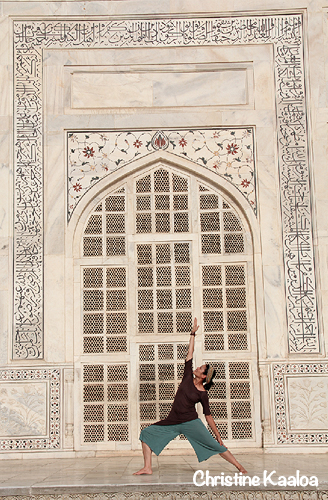
What are the essential things to know about yoga in India? I’m sharing things to know about yoga in India vs West. This ultimate guide to yoga in India is based on my experiences of studying yoga in India through a month-long 200 hour yoga teacher training certification in India and studying at a yoga ashram in India.
Some yoga enthusiasts think of yoga as a bunch of OM’s, a quick meditation and feeling the burn as they stretch. But studying yoga in India is different from the West. Hoo boy is it different. Culturally and environmentally, yoga training in India opened an entirely new way of seeing, understanding and practicing yoga for me. It will do this for you too…
Table of Contents: 19 Things to Know About Yoga in India | Yoga Eastern vs Western Differences
- 1 Essential Guide to Yoga in India
- 2 21 Things to Know about Studying Yoga in India
- 2.1 1. What is yoga in India? (It’s not what you think!)
- 2.2 2. What are the differences between Eastern yoga and Western yoga?
- 2.3 3. Traditional yoga in India is spiritual and religious
- 2.4 4. You learn yoga through your Indian environment (and your struggles with it).
- 2.5 5. Following the yoga ashram schedule is compulsory
- 2.6 6. Daily meditation teaches you mental discipline
- 2.7 7. Yogic chanting can be challenging for beginners
- 2.8 8. Yoga in India teaches Ayurvedic principles
- 2.9 9. The yoga diet is ayurvedic and vegetarian
- 2.10 10. You will study spiritual scriptures
- 2.11 11. Practicing yogic breath
- 2.12 12. Learn How to Use a Neti Pot
- 2.13 13. What are the most popular types of yoga in India?
- 2.14 14. How to Find the Right School for Yoga Teacher Certification in India
- 2.15 15. How to Find Yoga Ashrams in India?
- 2.16 16. How to apply for an Indian Visa for traveling India?
- 2.17 17. How to Pack for your Trip to India
- 2.18 18. Best Travel Insurance for Yoga in India
- 2.19 19. Are there Best Yoga Teacher Training Schools in India?
- 2.20 20. What do you need to pack for studying yoga in India?
- 2.21 21. Where to stay when studying yoga in India?
- 2.22 Recommended Essentials for India
- 3 Watch India Travel Guides for Solo Travelers!
- 4 More Ways to Plan your India Trip
- 5
Essential Guide to Yoga in India
Why study yoga in India vs West?
On the top of every bucket list of many yoga enthusiasts, there is one pilgrimage dream: studying yoga in India.
India is the birthplace of yoga, the source of OM, a word of powerful vibration and all-encompassing meaning. Many of us see India as a cradle nation, birthing guru upon guru, who in turn, spreads seeds of spiritual knowledge. Practicing yoga in India, is more than just studying yoga from an Indian guru, burning incense and chanting Sanskrit mantras, while leading you through down-dogs and sun salutations.
21 Things to Know about Studying Yoga in India
Yoga in India is vastly different from yoga in the West. Western culture puts a commercial spin on things, building yoga up into a 1 1/2 hour gym membership workout, where we can practice our flexibility, torch our calories and get your OM on so we can think we’ve become a deeply enlightened being in one syllable.
Here’s things you must know about yoga in India…
1. What is yoga in India? (It’s not what you think!)
Looking at Wikipedia’s definition of What is Yoga? ,you’ll wonder why you don’t see asanas in each paragraph. Instead, you see words like : Sanskrit, Hindu philosophy, Bhagvad Gita, Patanjali Yoga Sutras… Where is the “traditional yoga in India” that you’ve learned in your yoga studio back home?
During my yoga teacher training program, my teacher Lalit, told us traditional yoga in India is not about twisting the body into a pretzel, the asana (aka postures) or stretching. For rishis and yogis in India, the focus of yoga is spiritual attainment and not physical performance. The goal of yoga is to transcend the body through practicing meditation, studying spiritual texts, chanting kirtan and satsang, etc.. Asana practice is one of the limbs of yoga, but not the entire tree!
Read my month-long yoga teacher training experience in Dharamsala
In a way, the real body of yoga works occurs from the neck up… following a spiritual path. Thus, asana practice is used not to discipline the body, but tame the mind. The physical sport that many of us believe is yoga asana, is considered as a kind of “stretching” to yogis. Asanas originally evolved as a form of exercise for yogis so that the body wouldn’t go limp or the muscles atrophy from all the sitting they do. Asana is used not to discipline the body, but to tame the mind.
Did I just kill the yoga Santa Claus for you?
2. What are the differences between Eastern yoga and Western yoga?
“What? You disagree with what your guru’s said? Well, if you have all or any of the answers, then why do you need a teacher?”
That is my Indian yoga teacher’s response to a fellow student who challenged my guru’s belief. When studying yoga in India, the teacher-student roles are such that when an Indian yoga teacher instructs, then you ‘do’ without question. Eastern yoga is not like western yoga.
In western yoga, students are allowed and encouraged to question and … challenge ideas, but in eastern yoga, to question your guru is offensive to Indian yoga teachers. A guru’s knowledge comes from a lineage of traditions and answers come from years practice. If you are a student, your mind must surrender to your guru.
Side note: You can see how there has been abuse of power by many famous Indian gurus in the past. Devotees do not question what their gurus tell them
3. Traditional yoga in India is spiritual and religious
A shocking difference between yoga in the East vs West is that yoga is the practice of Indian yoga philosophy and spirituality over physicality. Eastern yoga practices surrender to devotional prayers, where an OM and other chants may have sound vibrational connections to chakras, opening channels to enlightenment. If you are not religious or if this challenges your personal religious beliefs, then studying yoga in India may not be for you.
In western yoga, teachers take great care to avoid the religion of yoga. OM-ing or chanting is kept light and cosmetic and some teachers avoid talk about chakras, opting to speak only of the physical benefits.
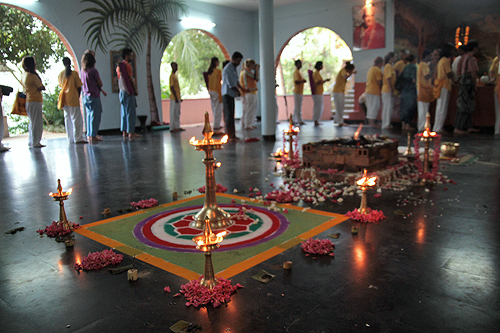
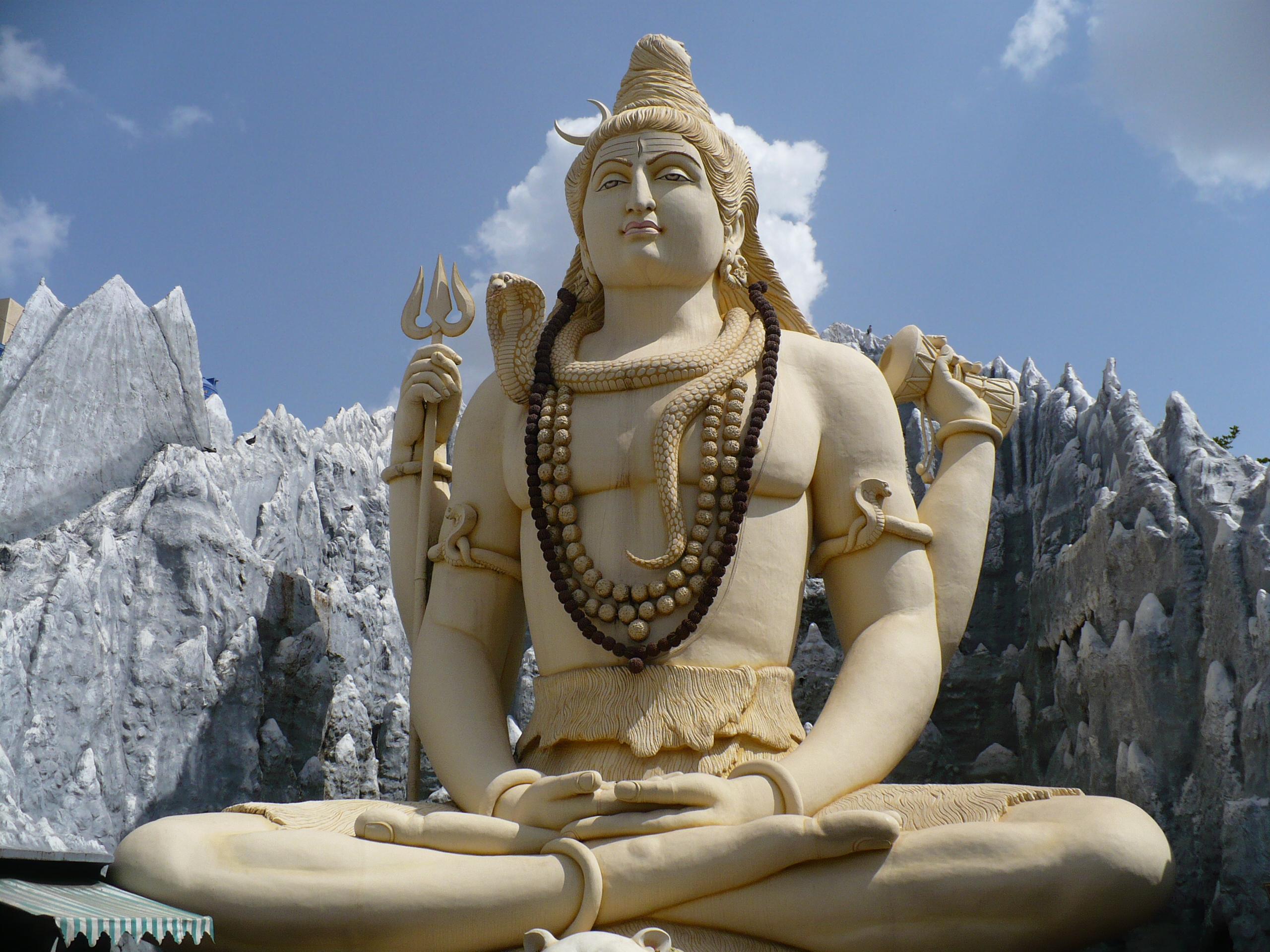
In traditional Indian yoga, statues of Hindu deities surround you in yoga shalas. You will be chanting, burning incense and paying respect to them in unison. When you chant the Hare Krishna song… you may feel you’ve just joined a Hare Krishna cult.
Tip: Adopt an open mind and do as the Indians do when folding hands in Namaste– honor and respect the God in everyone.
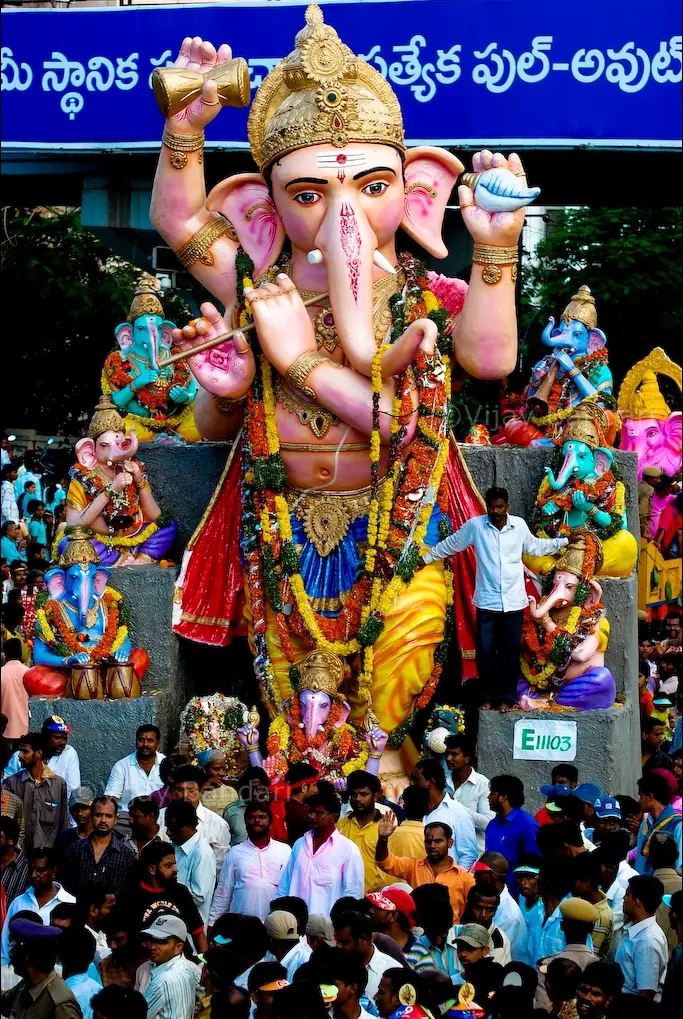
4. You learn yoga through your Indian environment (and your struggles with it).
You will learn yoga the moment you land in India. It is not about experiencing ‘juicy’ asanas. From the environment, daily lifestyle of Indians, traditions in puja rituals and chanting, to the food and eating with your hands… your learning of yoga will be ingested by your surroundings and everything you come into contact with. Everything informs your awakening to what yoga really is.
From temples to statues of gods and demigods and devotional music streaming from temple loudspeakers, you are learning yoga. India is steeped in daily devotion to its deities. Watching Hindu worshippers praying on the riverbanks of Varanasi’s Ganges at sunrise, you’ll understand the premise of a Sun Salutation.
Accidentally drink bad water and catch a bout of Delhi Belly? You are experiencing yoga through the physical roadblocks of your body. Everything in India enriches your learning.
Read: Tips on Indian Etiquette
5. Following the yoga ashram schedule is compulsory
Whomever you choose as your teacher or guru, know that your practice is compulsory despite your beliefs. You cannot opt out of event practices simply because it goes against your western/religious beliefs or because you don’t feel like it. I mean, you can if you’re sick or rude foreigner, but generally everything about yoga is to practice respect, dutiful compassion, discipline.
Read my experience of staying at an indian ashram
6. Daily meditation teaches you mental discipline
You will meditate and chant… a lot. I’m not kidding! It feels like over half your practice.
If you’ve never practiced either of things for long stretches, then you may get tired of a daily practice of it. But mastery comes with discipline and time. Although I had a regular meditation practice for years, I was horrible at meditating in the wee mornings of 6AM …and for anything longer than 20 minutes.
Be prepared to sit for long periods in meditation practice anywhere from 30 minutes to an hour. Your legs may occasionally go into spasms or cramping. Using a cushion helps, because your butt muscles will begin to hurt, from the sitting.
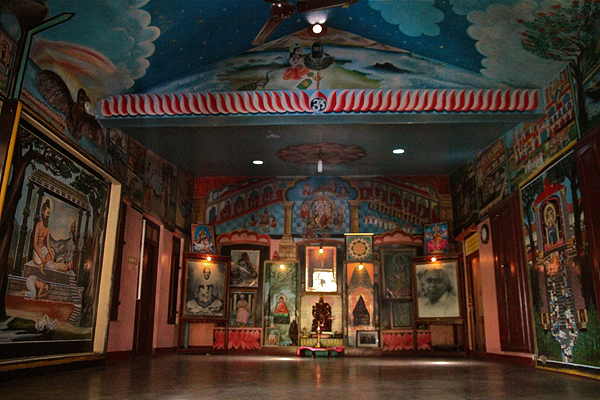 Meditation hall at Sivananda
7. Yogic chanting can be challenging for beginners
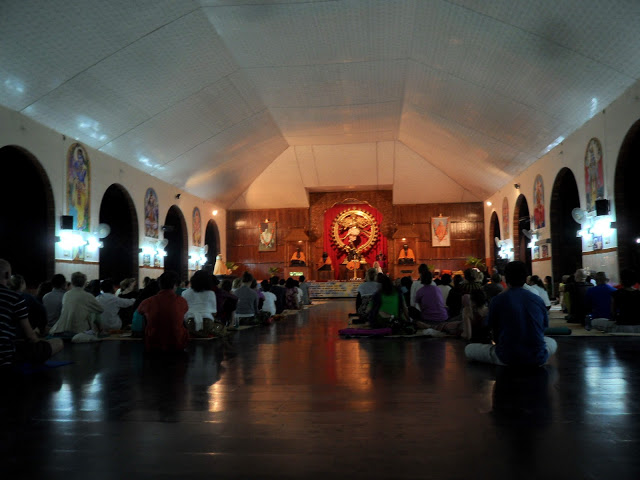
There were times I both, loved and hated chanting. When I started learning it, I hummed a lot before I learned the words of the chant. Half the time, I didn’t know what those words meant or what it was doing in raising my vibration or spiritual attitude. I had to jump in and go with the flow. At Sivananda, chanting sessions were anywhere from 1-2 hours daily. Generally, there is a book for beginners or you’ll learn by jumping in and listening to the words practitioners sing. The leader or a musician will play a harmonium and the chants and hymnals are often Sanskrit words , which you will learn the meaning. The types of chanting are:
Kirtan
Kirtan is a call and response type of chanting. While playing an instrument like a harmonium, the guru will chant one line and you will chant the response with the group.
Sanskrit mantras
Usually you’re given a book of sankrit mantras to sing.
Satsang
Satsang is chanting in the group. Often these can be lovely hymnals where you’re chanting to a Hindu deity is to become One with it. It’s a devotional prayer and you’re invoking and inviting that deity to aid your practice, focus and discipline. Some words (like OM, So-ham, etc.. ) have tonal/vibrational powers, which help activate your chakra energies. If you pay attention, youcan feel it
8. Yoga in India teaches Ayurvedic principles
Ayurveda is often seen as an alternative medicine but it’s been practiced in India for over 5,000 years and is considered the Mother of all Healing. Your school or shala is likely to employ an Ayurvedic doctor or practitioner/teacher so you can experience Ayurvedic healing through massage, diet, learning, etc… It is an interesting science of balancing five elements into three basic types of energy and principles (Vatta, Kappa, Pitta) that are in everything.
9. The yoga diet is ayurvedic and vegetarian
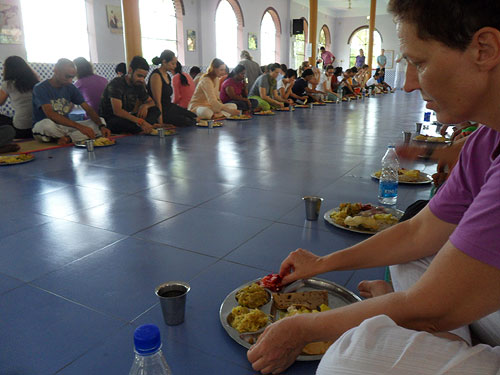
Yogic diets are often vegetarian and the meals are delicious. The food is light and prepared with Ayurvedic principles to balance body types. There are three ayurvedic body types (or doshas): Vata, Pitta and Kapha. Each person has physical and emotional attributes characteristic of one of these body types.
Thus ayurvedic diets help yogis accomplish their daily rituals with clear mental focus, to attain the enlightenment they strive for. Thus, ayurvedic foods are prepared to balance all elements of the body without creating imbalance (i.e. spice has a fiery attribute that is not good for meditation and keeping calm, too much air can lead to too much gas, too much earth can keep one slow and sluggish, etc…).
Read How to Understand Indian Food
10. You will study spiritual scriptures
Foreigners may not experience this side of yoga unless they are enrolled in a yoga teacher training program, but yogis study scriptures like Patanjali Sutras and the Bhagavad Gita which are a bit like a Bible. These are to help prepare and cleanse the mind as well as offer spiritual guidance as to how to live.
11. Practicing yogic breath
Breathing or more specifically, pranayama (aka yogic breathing) is a deep relaxing breath which opens the channels of your body for healthy flow and meditation.
12. Learn How to Use a Neti Pot
Thus, the Indian yoga philosophy of using a neti pot to clear nasal passages to aid pranayama breathing is a practice of traditional yoga in India. Neti pots are for nasal irrigation or clearing the mucus from the nose. Saline water from the pot is poured through one nostril and comes out of the other. If you do it correctly, it will pass through easily. Do it wrong and it will be uncomfortable, like inhaling a bit of water and getting a brain freeze. With advanced training you’ll learn how to use a traditional sutra neti (a neti with string). The benefits are that you’re able to breathe better, have an improved sense of smell and food tastes better (so they say).


13. What are the most popular types of yoga in India?
Hatha yoga, Ashtanga yoga, Iyengar yoga, Sivananda yoga, Kundalini yoga… seem to be the most popular types of yoga in India, with hatha yoga being the most common. Indian yoga styles and philosophies vary according to a guru’s lineage.
While yoga existed from long ago, Krishnamacharya was the father of modern yoga and his famous pupils went on to develop their own brands of famous yoga schools of India.
The father of Ashtanga yoga– Pattabhi Jois- has his home at the Ashtanga Yoga Institute in Mysore. His daughter now teaches at the institute and it is the most popular ashtanga yoga school in India (and pilgrimage spot) for western ashtanga yogis looking to be trained by a guru of originating lineage. B. K. S. Iyengar is known for correct and precise posturing and has Iyengar yoga training schools in Pune. Sivananda yoga also has Sivananda Indian yoga training schools and ashrams around India.
Read about my experience at Sivananda yoga ashram at Neyyar Dam
14. How to Find the Right School for Yoga Teacher Certification in India
What are the pros and cons of yoga teacher training in India?… How much does yoga teacher training cost in India?…Does your India certification allow you to teach anywhere? …Why get a yoga teacher training in India ?
Finding the right school for your yoga teacher training certification in India is a big deal to most of us, who want to grow our yoga practices abroad. If you are still reading this article, then it is likely you are thinking about the possibilities of growing your practice authentically through India. I got my 200 hour yoga teacher training certificate in India. Check here for everything you need to know about finding the best yoga school for your yoga teacher certification.
15. How to Find Yoga Ashrams in India?
There are a lot of spiritual gurus in India, just as there are different forms of yoga. An ashram experience requires you adopt their ashram daily schedule of meditational practice, kirtan (devotional music), karma yoga (devotional duty) and more. It is a regimented schedule. See my article on things to know about yoga ashrams in India.
I belonged toBrahma Kummariss World Organization (Mount Abu) for years, to learn and practice raja yoga, a kind of daily yoga yoking both, thoughts and actions to live more consciously and awakened. Other reputable but popular ashrams in India are Ammaritapuri ashram (home of Amma, “the hugging saint”) in Kerala, Osho ashram in Pune, Sathya Sai Baba ashram in Bangalore.
For those looking for a more physical yoga, you can find many yoga ashrams in Rishikesh or follow your favorite influence: Sivananda (there are many locations), Ashtanga Institute, BKS Iyengar.

16. How to apply for an Indian Visa for traveling India?
Read my article on Applying for an Indian Visa(for U.S. Citizens)
17. How to Pack for your Trip to India
India can be a challenging and complex country but also very rewarding once you feel like you’ve prepared for it.
Here is my Essential packing list for India.
18. Best Travel Insurance for Yoga in India
My yoga school made travel insurance compulsory. For good reason. Yoga enthusiasts get hurt and the training program is like training for a mini yoga olympics. The worst case in our program was that one of the students broke her toe and had to go to the hospital. But several others were getting anything from pulled muscles, back spasms, … I got sick, we were all dropping like flies.
Although there are good doctors and hospitals in the big cities, you might not always have access to them. Also, traveling in India has its obvious risks– standards and regulations are different from the U.S., so safety precautions and measures aren’t always perfect. I went with World Nomads to cover my entire trip and it was the cheapest I found.
19. Are there Best Yoga Teacher Training Schools in India?
There is no such thing as the best yoga teacher training school in India, as yoga styles are specific and change with the individual. There is only, what is the best yoga school for you based on your beliefs, style and preference. Here’s a few good choices based on positive online reviews:
Rishikesh Yoga Teacher Training, Rishikesh
29 Days and a 200-Hour Fusion Yoga Teacher Training in Rishikesh. You’ll practice an integrated style of Ashtanga, Vinyasa, Power, Ayurveda, Hatha. You receive a welcome yoga kit which includes ” yoga mat, books for study, school shirt, water bottle, neti-pot, rudraksha mala”. Click here to read reviews
*Students who complete trainings are eligible to register with Yoga Alliance as Registered Yoga Teachers (RYT®).
Yoga Vidya Mandiram School, Rishikesh
Located in Rishikesh this Hatha/Ashtanga Vinyasa school has a lot of good reviews and is a popular choice in Rishikesh, with 22 days and a 200-hour program which prepares you for the 300 hour level and goes up to the 500 hour level. It promises a “training you are eligible to register with Yoga Alliance as Registered Yoga Teachers (RYT®).” Ayurvedic doctor on hand. Click here to read reviews
Alakh Yoga, Rishikesh
Alakh Yoga in Rishikesh is a Hatha and Ashtanga based yoga teacher training with Naturopathy and Emotional Rebalancing. A 40 room campus building with Spa, rooftop and two indoor yoga studios. Their 26 Days, 200 hour training offers Yoga Alliance US and International approved 200 Hour Yoga Teacher Training Program with the aim of teaching ancient traditional yoga with detoxification techniques. Click here to read reviews
20. What do you need to pack for studying yoga in India?
Depending upon whether how long you plan to study yoga in India, your yoga essentials may change. Most shalas provide the basics you need for a class session, such as yoga mat or blocks. If you are visiting for a short term, you will provide your own accommodations, likely booking a stay at a nearby guesthouse. If you are staying longer, you need to rent housing, which is not difficult and your school will have recommendations.
Students staying longer usually want to buy their own yoga mat for their practice. Either the school will sell it or advise you where to buy it in town. It is not difficult to travel with a yoga mat onward, especially if you carry a yoga sling bag. Your school will advise you about yoga training books you need in advance. Autobiography of a Yogi is gonna be one of them, so if you’ve already read it, you likely won’t need it!
Read my on Tips: How to Find the Right Yoga Training Schools in India.
21. Where to stay when studying yoga in India?
Finding accommodations in India can feel daunting and tricky for any first time traveler planning a trip to India. Here are your options:
Find a nearby guesthouse
You can easily find your own hotel or guesthouse near your yoga school. The quality may not always be the western standard that you are used to. For starters, read my travel tip below.
Read my travel tips for finding Indian accommodations
Take $40 off your next Airbnb Stay by using my referral code.
The yoga school’s yoga shala
Some yoga shalas may have temporary or short term housing for students but you will likely need to commit to a week or two, stay at the minimum. Expect package costs. Meals may be included or might be something you take on your own. Unless you are enrolled in a program, you will likely have free time to yourself to enjoy sightseeing.
Ashram Stay
Ashrams in India have housing for students, but you will likely need to commit to a week or two, stay at the minimum. Expect package costs. Meals are often included and you will follow a compulsory schedule from morning to night. You will have programmed free time, and there may be one excursion day a week, when you may leave the ashram to enjoy life outside.
Month-long+ or yoga certification program stay:
Your yoga school will have a shala to practice and study in. Some schools have a home base location but may offer mobile locations for their programs. For instance, my school Himalaya Yoga Valley was based in Goa but they had a certification program for those who wanted to study in Dharamsala. If you visit your school’s base location, they will likely have accommodations. For mobile locations, they reserve accommodations in a building for students to rent or you are free to find your own accommodations in town. I stayed with my school’s recommendation as the shala was on the rooftop of my guesthouse and waking up for 5am class was easier for me.
Recommended Essentials for India |
|||
  |
  |
  |
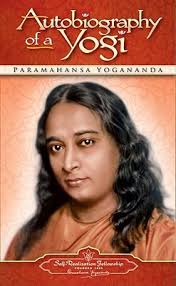  (Required reading YTTC) |
What would you add to my guide to studying Yoga in India? Follow along for more India travel tips!


Watch India Travel Guides for Solo Travelers!
More Ways to Plan your India Trip
How to Plan your First trip to India
How to Use Transportation in India
26 Best Bollywood films to Inspire India Wanderlust