
Last Updated on February 9, 2026 by Christine Kaaloa
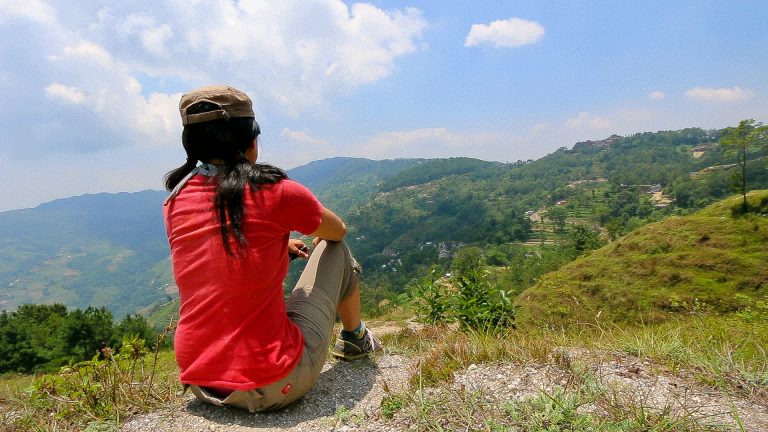
Anthony Bourdain famously said, “I’m a big believer in improvising and getting lost.” While some travelers thrive on meticulously planned itineraries, I’ve found that embracing a level of spontaneity can lead to the most memorable and immersive travel experiences. Going into a trip with few plans to structure it can also lend to a fair amount of stress and anxiety… like rolling into a hill station town in India without hotel reservations and carrying your luggage from door to door on foot…uphill!
In this post, I’ll share my tips for navigating the fine line between spontaneity and structure, and how to travel confidently without a plan.
This post contains affiliate links. I never leave home without travel insurance– I like to buy insurance that covers theft and adventure but here’s a trip insurance finder tool to find a plan that matches your budget.
Winging it as a solo traveler: My background
Table of Contents: 11 Savvy Ways to Solo Travel Without a Plan | The Art of Winging It in Travel
- 0.1 Winging it as a solo traveler: My background
- 0.2 Spontaneity and improvisation is a unique travel safety net
- 1 Improvising Travel: 11 Easy Ways to Travel without a Plan
- 1.0.1 1. Know the essentials
- 1.0.2 2. Know your route (and purpose!)
- 1.0.3 3. Keep track of your budget
- 1.0.4 4. Hit up the airport’s official city tourism desk
- 1.0.5 5. Gain recommendations from other travelers and locals
- 1.0.6 6. Using hostels intentionally
- 1.0.7 Why I prefer hostels to hotels if i’m winging my trip
- 1.0.8 7. Use guidebooks and travel blogs
- 1.0.9 8. Download Mobile apps
- 1.0.10 9. Get lost & explore on foot
- 1.0.11 10. Listen to your Intuition
- 1.0.12 11. Book your hotel for the first day
I’ve had my fair share of documented international solo trip improvising since 2008, although I certainly started my travel improv lessons far earlier than that. From snagging last-minute international trip deals with as little as three days to prepare, visiting international friends with no plans to long haul country-hopping trips spanning months, I have unforgettable stories of finding solo confidence and resourcefulness, when free diving into foreign cities.
…And I also have anxious moments and roughing it stories of sleeping in an Indian bus station on a bench swarming with mosquitoes at 3am or searching for a warm spot in winter cold train stations in Asia.
…Arriving at a ghost neighborhood based off recommendations from my guidebook and walking from hotel to hotel on a hot afternoon in Phnom Penh.
Would I regret any of those moments? No. They tested my resourcefulness, my boldness, my survival skills for navigating a foreign place and refined them.
These days, due to managing a blog and YouTube channel as a business, I have a budget where I plan more of my trips around content, so there is more advanced researched, a return ticket and a game plan. But I still find time to improvise my travels where I can.
Spontaneity and improvisation is a unique travel safety net
You wouldn’t think of winging it as a kind of safety net for solo travelers. But travel improvisation tests your adaptability on the road, as you traverse unfamiliar territories, languages and customs. Improvisation is an especially handy skill to have as a traveler if you have long-term trip plans.
While the structure of a well-planned itinerary can provide a sense of security and stability, the ‘art of spontaneity and improvisation’ allows you to roll with the unexpected and respond to the moment with either, change or permission.
With improvisation, you can quickly re-route or change plans, amidst obstacles, setbacks and potential opportunities.
Being a fast improviser, troubleshooting traveler, gives you the flexibility and adaptability to roll-with-the-punches and think on your feet. This can come in handy when you’re getting scammed or when you arrive at your hotel at midnight only to find they gave your booking away.. my list of self-survival troubleshooting experiences grows longer each year.
When you can MacGyver plans, it makes you :
- more confidence in navigating unfamiliar situations alone
- better at gauging situations and your tolerance level for them
- confidence in negotiating between risk and your safety
- resourceful in finding solutions
- attuning to hearing and acting upon your intuition
- knowing your limitations and boundaries
The safety net it creates is self-reliance and the ability to catch myself, when I don’t have a travel partner. To know you can adapt, survive and navigate a foreign country when there are setbacks is a powerful realization to carry into your daily life!
No matter the situational fears I have about my future, being able to improvise my trips has made me confident that I am capable of in surviving and problem-solving my way out of bad situations. My “What If” fears and anxieties that were obstacles to my dreams, weaken.
Read Is solo travel safe for women?
Improvising Travel: 11 Easy Ways to Travel without a Plan
Often when you’re improvising a trip, you’re looking to fill in gaps in your trip research. The last thing you really want to do is panic scramble to come up with an itinerary game plan when you arrive at a place. Albeit sometimes, you’re doing just that.
Here’s tools I use when springing into last minute trips, long haul trips with open-ended plans, 24 hour layovers and when I’ve not done proper trip planning and research.
1. Know the essentials
Research basic information about your destination to build your general confidence that you’ll be able to navigate it. For me, my rough foundation is : cultural and dress etiquette, potential scams, general country economy (I make sure hotel prices match my budget range) and transportation options for traveling the city. The last two determines how much time I’ll spend in the city, if any.
For example: I was invited to attend a conference in Arizona, whereby my airfare and conference event ticket would be paid for. Traveling the U.S. I know what to expect – western dress, etiquette, likely U.S. metropolitan scams, but higher costs. I was thrilled – all I needed to find was a hotel for the week in the conference neighborhood, that matched my budget. I found no hotels matching my budget, except alternative lodgings further away. The only transportation shuttling between the hotel and event were taxis and rideshare, meaning I’m dropping $5-10 each way. The cost of a hotel matching my budget turned out to be three times the cost of my flight and conference ticket together. The hotel alone was the cost of an international trip and this was not a city on my bucketlist.
2. Know your route (and purpose!)
Have an outline of your route with a general purpose for visiting. The city-to-city route you’ll take is an vital foundation to set up before your trip. Your goal posts are set, allowing you flexibility with how much time you want to spend in each place.
Additionally, when you know the purpose for your destination, you can match your activity level to it.
Are you traveling to experience relaxation, adventure, sightseeing, exploring local ways? When I was in my twenties, my goal wasn’t to sightsee landmarks but to visit art galleries, museums, hang out at cafes and wander streets photographing ideas. I was satisfied with not having a stacked itinerary but instead, following my muse.
3. Keep track of your budget
When improvising your trip, it’s easy to lose track of your spending and expenditures. Small things quickly add up and foreign currency can get to feeling like play money. A budget to track your trip expenses, should have categories like hotel stays, transportation, flights, visa, food, etc… and give you a overhead view of how much you’re spending against what you allotted for yourself. I track my expenses on a trip expense spreadsheet. The tracker lets me know where I might be splurging beyond my budget and where I have to be more resourceful.
I give myself a daily cash allowance to cap my daily cash expenses and a ballpark trip budget to provide a trip expense ceiling.
Get my international trip expense tracker for travelers and content creators (below) if you want to keep track of your expenses in one place and convert foreign currency expenses into USD.

4. Hit up the airport’s official city tourism desk
Most city tourism boards have a kiosk at the airport when you arrive. Look for the tourism board kiosk desk. They will have advice, city maps and help you find your way around. I use this a lot when I want to gain my bearings and quick overview of a city. I also use this resource when I have a long layover and I want to feel like my trip into the city has some guidance. I always ask for maps, inquire about public transportation operation hours and ask if they know about any travel discounts. In Tokyo, it led me to learning about Unlimited Metro day passes.
Travelers don’t think they can travel a city without researching it before hand. I have literally asked kiosk agents for their recommendations of top things to do in the city with my time frame and to circle them on the map and tell me the bus number if they know it. Voila, you have a locally planned itinerary! Check out free city sightseeing tours at the airport
Tip: Please always be courteous and appreciative for their help. If there is a long line of travelers waiting for them and you know your query is going to be like mine, go grab a coffee and come back when there is no line.

5. Gain recommendations from other travelers and locals
I get tons of inspirations and tips from other travelers. I like to strike up conversations with travelers who are already in the destination I am traveling as they offer the most current information and recommendations about activities and places I have on my itinerary. Often, I’ll get unfiltered opinions about whether a place fits my travel style and interest or not, and they warn me about scams and touts.
Meeting travelers, I also make new travel partners to share taxi ride, be a dinner date or be a sightseeing buddy the next day. Read my post on How to Make Friends as a Solo Traveler
Local front desk agents offer a lot of tips and they can be highly informative and detailed information about navigating. I also like to ask them what neighborhoods I should avoid or safety tips they’d recommend to a traveler like myself.
Tip: If you get recommendations from other travelers, always get the address of the recommendation and/or a phone number or website.
6. Using hostels intentionally
Staying at hostels allow you to meet fellow adventurers. Doesn’t matter if you’re 20 years or 50 years old, hostels are hubs for real-time travel tips and budget-friendly options. Hostels are infamous for drawing a backpacking budget traveler crowd that is looking for cheap ways to get around and enjoy their explorations. Thus, local staff tends to point you at budget friendly options. Some have information on budget tour agencies or offer tours of their own.
Unpopular opinion- as a solo traveling woman in her 50’s I still enjoy staying at hostels. I know many travelers my age feel they have outgrown the hostel experience. Personally, I think they’re approaching it with a different mindset that assumes with age, they should “upgrade”.
If I want the convenience of my own room at a hostel, I simply book a single room option. I also prefer female only dorms where I might meet female travelers to do things with. In San Juan, I stayed at an all female dorm and found a travel buddies to spend dinner with to sightseeing Old San Juan’s top attractions.
Why I prefer hostels to hotels if i’m winging my trip
I enjoy hostels because it is a community space with a friendly, open and inspired travel vibe; whereas, hotels can feel like isolation tanks for business, lovers and family travelers, who want to be left alone. I’m not seeking to feel more alone than I already am!
While I enjoy staying at hotels, my personality has a tendency to dip into lonely-ville and incubation mode in solitary environments. This actually makes it feel more challenging for me to leave my hotel room.
With hostels, I get local insider advice that helps me make my dollar stretch, find more meaningful activities and I’m pointed at more authentic attractions and mom and pop businesses to enjoy. Travelers entering hostels are more inspired to share itinerary ideas in lounge areas and over bed bunks. It’s a place to make fast friends as travelers range from solo to budget conscious, so they are more open to picking up travel companions to share activities and split costs with!
But here’s the real reason I intentionally stay there- I can enter a hostel without an itinerary and emerge from it with first-hand recommendations about everything, form quick plans and maybe nab a companion. The research, itinerary planning, etc… is done over chatting and laughing with other travelers.
Hotel guests carry the opposite energy. I am reliant upon concierges, who often give “touristy advice”, advising you on how to spend your money to get more convenience, comfort and assistance for your solo itinerary. Guests are in their own trip bubble with airtight plans.
If I go into a hotel with no itinerary or city research, I am spending my evenings researching the internet to make simple plans for the next day. Honestly, most of the time, I emerge with one or two ideas and a lot of pointless wandering on foot “exploring” with no real focus. I’ve had some of my lamest improvised trips when I stay in hotels.
Read how to budget for long term travel

7. Use guidebooks and travel blogs
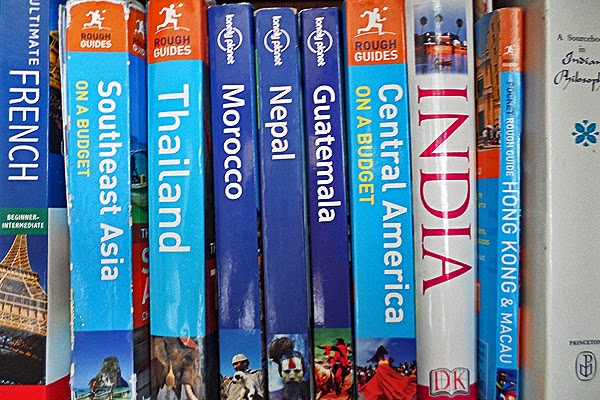
Guidebooks and travel blogs can be valuable resources, even for the most spontaneous travelers. I use them to get a general overview of a destination and identify potential points of interest or offer specific recommendations to alleviate my research time .
However, always be prepared to deviate from physical and online guidebook information and embrace unexpected opportunities.
Once, a guidebook listed outdated hotel information in Phnom Penh. A tuk tuk driver warned me about it but I thought he was pulling a redirection scam one me. When he dropped me at the vacant hotel, I realized he wasn’t lying. By checking my guidebook for alternative areas with accommodations, I was able to find my way to another neighborhood with hotels and found a hotel on foot. That improvisation cost me most of my day, but it also led me to a hidden gem.. a clean $5/day hotel room that I spent a week in and which was a bus stop hub that sold local bus tickets and budget package itineraries.
8. Download Mobile apps
These days, having a smartphone with travel apps helps make last-minute decisions and bookings.
- I’ve had moments when I’ve booked hotels and train tickets from my mobile phone.
- I’ve used navigation apps like Google Maps and Waze app to find attractions and my way around the city.
- Metro maps help me navigate subway stations and these days, many cities have Uber or their own version of it.
- Translation and currency conversion apps are vital
Pro-Tip: Always have a data plan so you can make bookings and research information from your mobile phone. I use Airalo e-SIM that I can activate before arriving into a city and top off from my mobile app. It saves a world of stress!
9. Get lost & explore on foot
Embrace the “getting lost” experience. Sometimes, the most memorable travel moments happen when you step off the beaten path and explore the unknown. You might stumble upon a morning market or a shop selling odd but fun items; getting lost is wonderful for discovering hidden gems and interacting with locals. Unplanned moments are where a destination will occasionally reveal its magic and you’ll find your rhythm with a place.
However, when you wing it, you also have to be prepared for when things don’t work out smoothly.

10. Listen to your Intuition
Intuition plays a big part in solo travel because you don’t have another person to look out for you. Solo travel forces you to listen and trust your intuition more. Intuition becomes stronger not only because it plays a bigger part for you as a solo traveler, but because being alone allows you to better hear those firm but guided whispers.
Those “nudges” to “go to breakfast NOW”, which leads you to striking up a conversation with another traveler, who becomes your travel buddy for the day… to those whisper warnings to not trust a stranger, because he’s not who he says he is… are all vital to your improvisations in travel. It’s your ESP safety guide through unfamiliar terrain.
11. Book your hotel for the first day
The key to successful “winging it” is finding the right balance between spontaneity and structure. Allow yourself the freedom to explore and discover, but also have a few key things planned — accommodation is a big one because it is your home base and your sense of self- security. Have at least the first or few days of your hotel booked so you feel stable upon arriving into a new city.
Travel is about embracing the unexpected and discovering the beauty of the unknown. By combining a sense of adventure with a touch of planning, you can create truly unforgettable travel experiences.