
Last Updated on January 27, 2026 by Christine Kaaloa
These days, there’s a growing interest in solo travel. Traveling solo can empower you, gain you more confidence and open a new world of travel freedom for you. But how to plan a solo trip?
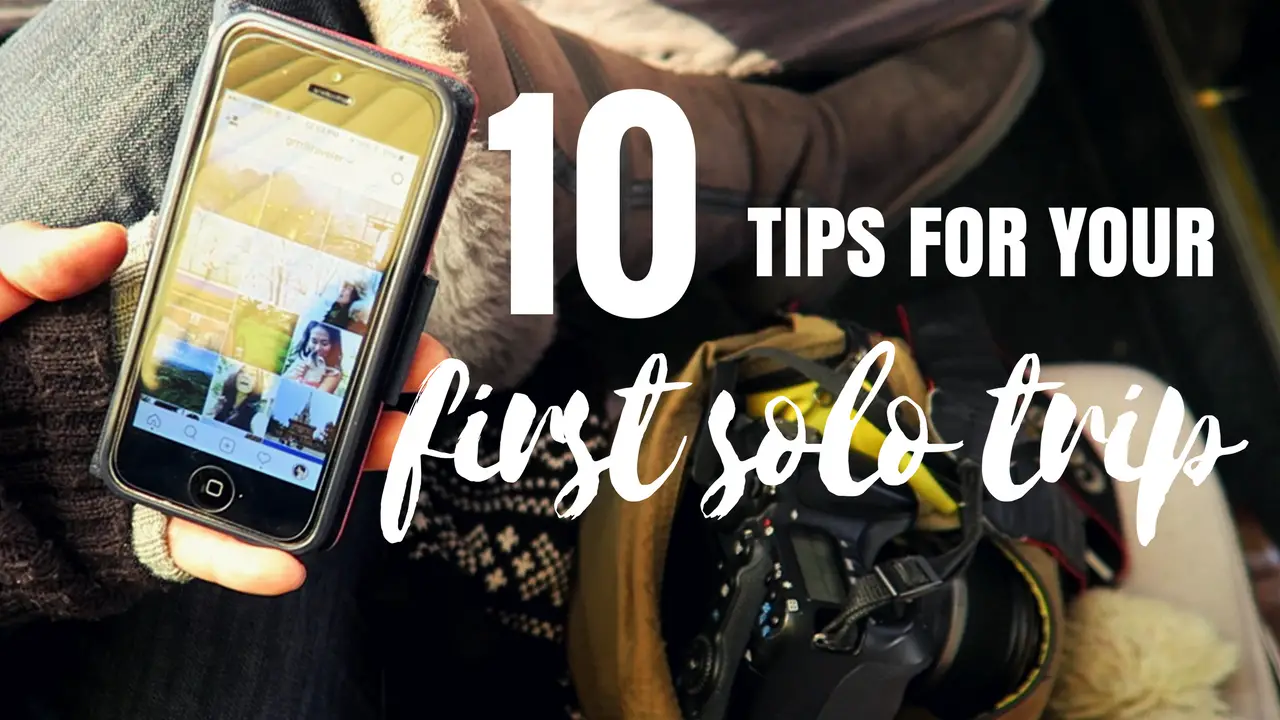
10 tips for planning your first solo trip
Table of Contents: 10 Tips for Planning your First Solo Trip
1. Dress for respect and to blend in
As a female traveling alone, I don’t like to stand out, call attention to myself as a tourist or attract unwanted male attention. Dressing to blend into the culture helps others feel more accepting of you as a foreign traveler, it is respectful of the cultural values and it says a lot about your economic and cultural background.
- Respect cultural differences & research the cultural etiquette. The dress codes of the city/country you’re visiting can be different. It’s not smart to assume western clothing as okay to wear anywhere you go, especially when it gets more revealing.
- When in doubt, dress respectfully and conservatively. Non-western conservative countries may have different ideas of what they see as “provocative clothing”. It may come across as disrespectful, sexually loose or culturally inappropriate to assume western clothing is okay across the board and you may encounter male harassment. In a Muslim country like Pakistan, snug and form-fitting clothes can get you yelled at. In Iran, not wearing a hijab (if you’re a woman) can set a bad tone for your trip. Korean women love short skirts, but low-cut or spaghetti string blouses are considered “sexy”, and does not have a favorable meaning. Japanese culture can be sensitive about tattoos, as its related to yakuza (the Japanese mob).
- Temples and religious buildings have a modest dress code. Observe the local traditions and the conservative attire on your visits to these places. In Asia, footwear is removed when entering temples. Definitely observe the locals to see how they act in these places.
- Avoid looking like a rich tourist. This can attract tourist scams and higher prices when you haggle. Sometimes, I like to go as far as “dressing down” (and more backpacker-ish), especially if I’m entering a country with a lower economy.
2. Book accommodations in advance
While I am always prepared to wing my trip plans, I still plan my itinerary, especially when it comes to how I manage arriving into a country or city. Arriving into a new destination can feel disorienting. Leaving the airport you encounter a rush of emotions and activity. From taxi drivers and touts, crowds, language barriers, and cultural differences. Booking your accommodations in advance makes you feel safe and grounded by having a home base. It also makes you feel successful for having achieved the first step of solo travel- getting from the airport to your hotel.
- Always book your first night of accommodations in a new city. I like to use Booking.com. They have free cancellations up to a specific date, so if your itinerary activities change and you decide you want to stay in a different area of the city, you can change it. Stays with free cancellations may cost a tiny bit more for your convenience and flexibility. Additionally, as the hotel may lose out on a booking if you cancel at the very last minute and no one fills your spot, please be cognizant of that fact that your changes can cause a business to lose money and if it is a small hotel or family guesthouse, then your changes are a negative impact.
Pro-Tip: I recommend only booking hotels you are serious about – avoid “place-holder” bookings- and make your changes early — ideally, pre-trip, so the hotel has ample time to fill your spot. - Inquire if your hotel has a free airport pickup service. Hotels with airport pickup service are super handy as it minimizes your getting lost. In fact, if a hotel offers this service, I may prioritize booking them just so I don’t have to deal with taxis, Ubers and public transportation. In Varanasi, I stayed at a hotel that had airport pickup and although the transportation broke down and it was a bit of an ordeal, when I arrived in the ghat area where only foot traffic is allowed, it was helpful to have a hotel attendant guide me through the crowded maze.
- Take a hotel business card or write down the phone number, address and directions of the hotel. If you are ever lost and need to call upon a local stranger, Uber or taxi , you have that. In Seoul, when I was lost finding my hostel, a friendly Korean called the hostel for me for directions.

3. Pack light
For solo travelers, it’s best to travel light. Traveling light helps you manage your luggage and navigate crowds with ease, and it gives you the freedom to use public transit (i.e. buses, overnight buses, trains) where luggage storage is limited. Traveling compact is also helpful when it comes to having to go to the bathroom (and not having anyone to watch your luggage)!
- Consider downsizing to carry-on luggage. I use a carry-on compliant wheeled convertible backpack . I love that it gives me the option to use it as a wheeled bag for times when I’m tired of carrying it as a backpack. Read my ultimate guide to wheeled convertible backpacks
- Take only what you need. I look at all the things I want to take with me and then I try to cut it down to fit 3/4 full (or 1/4 of space in my bag). This also allows me space for collecting souvenirs. Read my packing tips for carry on luggage
- Pack multipurpose clothes
- Buy a couple of merino wool pieces and socks to minimize washing (read how merino wool revolutionizes travel).
Check out my Packing List for Female Solo Travel
4. Safety
Safety is of the utmost importance for solo travelers. You’ll need to utilize street smarts and take precautions as you won’t have others to watch your back.
- Don’t flash around valuables. Most of us travel with gadgets like smartphones, laptops, iPads and cameras. Keep them near to you or on you. Never leave them unattended on a table or in an open backpack.
- Leave valuables at home, where possible. If you feel like you’ll miss it if you lose it or it gets stolen then don’t take it.
- Make your valuables difficult to get to. Think of ways and travel gear that will help you make pickpocketing difficult. Every additional step to getting to your valuables lessens a pickpocket’s desire to steal from you. Read my ways to outsmart picketpocketing and theft.
- Always be aware of your environment. Watch my Safety Tips video and read my 31 Street Smart Safety tips for Solo Travel
- Sign up for the Smart Traveler program with the U.S. Government.
- Traveling with others can work against you. Traveling with a partner may seem ideal because you know there’s someone watching your back, look over your luggage when you go to the bathroom and your valuables safe. However, a partner can also distract you and can work against you if your they do not match your travel style or budget.
- Travel insurance is always a good idea. The more I travel, the more I notice careless tourists being overly adventurous, taking risks and thus, get into accidents. Many travel insurance policies are basic and do not cover lost or stolen. I use World Nomads Travel Insurance for adventure trips , but here’s a trip insurance finder tool to find one for your budget and needs.
5. Before you leave your hotel
It can be stressful if you’re rifling through maps and trying to figure directions out when you’re traveling.
- Before leaving your hotel/hostel, have all your maps, bus numbers and routes planned. Ask your front desk or the concierge for assistance. Have them take a pen or marker to your map and scribble bus numbers and routes.
- Google Map or Mapquest for your directions. If I don’t have online internet capabilities I will screenshot my maps and keep it in my phone. If you don’t have a data plan to use Google Maps on the road, take a mobile snapshot of the map and directions.
- Have an unlocked smartphone and local/eSIM . I have an unlocked iPhone
and helps immensely these days. I pair it with an Airalo eSIMs which I can activate in advance. Google Maps and mobile apps can be indispensable for navigation and last minute bookings. An unlocked iPhone can also double as a wifi hotspot for other devices.
- Take the biz card of the hotel in case you get lost and need to hail a taxi back.
- Download free metro map apps. I like the ones you can use offline in the case you don’t have a good WiFi connection.
- Download Google Translate. It also has voice features and a handy photo translator where you can hold your camera phone up to whatever you need to translate (ie. a menu or banner) and it makes suggestions of what it means.
Read my Essential Tips for Staying in Hotels & Things you MUST Know about Hostels
6. Let friends & family know
Always let your loved ones know where you’ll be going as a safety precaution.
- Leave your itinerary and a copy of your passport with family or friends so they can trace you or help you from their end when you are in trouble.
- If you’re a US citizen, sign up with the Smart Traveler Enrollment Program, which assists travelers in case of emergency.
- Check-in on social media to let SELECT friends know where you’re at. Social media is ubiquitous and friends check in at places anywhere from airports to restaurants and parks. These days in extreme cases of “missing travelers” (like the Nepal earthquake), many friends and family were checking out their loved ones’ Facebook profiles to see where they last checked in to trace the last place they were before the earthquake hit. I only let select friends know my location and if i’m on a trip- I try not to announce it to people I don’t know because it lets strangers know that you are not at home, which can make your home vulnerable to burglery.
- Follow my safety tips for staying connected, even if all you meet are strangers. Please don’t be one of those travelers who goes missing.
Check out my recommended trip resources for solo travelers
7. Confidence
Confidence matters when you travel alone.
- Fake it until you make it. The last thing you want pickpocket and thieves to see is a vulnerable and naive solo traveler. It could make you a target for scams and theft.
- Strike up conversations with others and ask trustworthy locals for help. Some of it will come out of sheer survival instinct and you’ll need it to get around. Remember, most people want to help you. I’ve found locals more trustworthy than merchants and taxi drivers.

8. Exploring alone
While it might be scary to get lost, allow yourself to get a little lost. It’s part of the fun of travel.
- Explore streets and markets during business hours and when others are out on the streets.
- Look for free walking and city tours.
- Strike up a conversation. I meet and make travel friends everywhere from a hostel, to restaurants and cafe, even on buses going from one city to another. Sometimes, this has led to shared transportation, tours and accommodations.
- Avoid arriving into a new city 11pm to 3pm when businesses are closed and no one is on the streets.
9. Have backup plans
All the fears and hypothetical worries you have about traveling alone encourage us to formulate backup plans that might nip that scary idea in the butt.
- Take your hotel business card with you in case you get lost and need to hire a taxi to bring you back.
- Keep copies of important documents like passports in different parts of your bag, as well as online in your smartphone photo album.
- Take backup money and/or credit cards in case your ATM card doesn’t work or your credit card gets flagged.
- I always have a backup plan with my family for the worst possible scenario. It lets them know of the steps they need to take, even in the case of death. Watch my video.
10. Smile
For whatever reason, you’re choosing to take a solo trip. A smile is a universal language and shows people you’re friendly and welcoming.
How do you plan a solo trip? Share your tips for planning your first solo trip in the comments!
Looking for travel insurance?
American travelers often pay a premium on travel insurance. World Nomads offers economic solutions for travelers who seek security and peace of mind. It covers 150 countries.