
As a foreigner teaching public elementary in Korea, I’ll readily admit, there are many differences between Korea and the U.S. Each day is far from boring.
Americans Teaching in Korea
Table of Contents: 10 shocking facts about Korean schools
- 1 Americans Teaching in Korea
- 2 Here’s 10 shocking facts I learned about Korean schools:
- 2.1 1. How long is a school day in South Korea?
- 2.2 2. Koreans have school on Saturdays.
- 2.3 3. Teachers are respected in Korea
- 2.4 4. There is a Business side to Teaching in Korea
- 2.5 5. There is a five year teacher-principal rotation cycle
- 2.6 6. Role playing lessons can be very Hollywood style
- 2.7 7. Corporal punishment is still alive (although quite hushed)
- 2.8 8. Why do some Korean students have “English” names?
- 2.9 9. Students take responsibility for the cleanliness of their school.
- 2.10 10. There is Shoe Etiquette in the Korean Classroom
My mother has been an elementary teacher in the public school system all her life so my experience in elementary school comes from having helped her in classrooms, as well as having worked in U.S. businesses and having taught other types of adult workshops due to my Master’s degree. I’ve studied at universities from St Louis, Los Angeles and New York City. However Korean culture and the language is obviously very different.
When I went through my EPIK teaching orientation program in Incheon, we learned some of this more intricate stuff I’m sharing about the government public school system. It was to prepare us for the varying conditions and types of schools we would be sent to teach in. Each school is run slightly differently. You have principals and teachers who manage their schools and classrooms differently. EPIK teachers went to various cities- Daegu, Busan, Jeju Island, and more…- go to affluent areas of the city ; others may go to lower income or even rural areas.
As excited as I have been about being here and my Daegu apartment and neighborhood, teaching in Korea comes with its rough bumps. My initial welcome to my job placement did not start very warmly. As many of us are very new to Korea, we are dispersed to different cities and even different schools in the city, we started a Facebook group to share lesson plans, insights and mild anxieties with our new teaching system.
Wanna know what it is like living and teaching in Korea, see my So you Wanna teach in Korea page?
Within the first month of my living and teaching in Korea,…
Here’s 10 shocking facts I learned about Korean schools:
1. How long is a school day in South Korea?
Korean high school students have a 16 hour school day
Just how strongly do Koreans feel about education? It would shock you.
The average high school student generally has class from about 8am until 9:30pm or 10pm. For the average Korean high school student, the goal is to get into good college and often, the competition is high.
As a result, many will attend a agwon (aka a private after school learning program) to accelerate their learning. Hagwons are private entities, which help reinforce higher education and English skills, so there is often a high demand for them. Often, they are run strictly like a business, running one class after another, prepping students for exams and drilling skills into them from the textbook. For students, this is perhaps, their one social outlet and way to meet other friends.
Due to education being the main extracurricular sport, the average teen doesn’t get home until midnight. Thus, dinner is actually served at school.
Middle school is a bit more lenient, as classes end around 4pm, with a possible hagwon learning afterwards. Read a 2018 BBC post on the pressure regarding university entrance exams for high school students.
Read my YouTube video: EPIK vs Hagwon: Which is better?
2. Koreans have school on Saturdays.
If you think Korean students have the weekend for recreation, think again. The official school days were originally Monday to Saturday, which didn’t make for happy students or teachers.
Since 2010, the school schedule, has changed and loosened up. Now the Korean public school system has two Saturdays per month, off.
Update: A volunteer from the Korean Culture and Information Service(KOCIS) has informed me that “…since 2012, Korean public school system has every Saturdays off.”
3. Teachers are respected in Korea
In Korea, the saying is “Teachers are as high as God“.
You wouldn’t guess that from their pay scale, but teachers hold a valuable and respected place in society. Korea emphasizes education and schooling to the power of a hundred. As a result, Korea possesses a high regard for its Korean teachers as being pillars of the schooling system.
Retirement age isn’t until 65 years old. Seniority means increased pay and the overall work hours, holidays and vacation benefits are said to be better than regular office jobs.
4. There is a Business side to Teaching in Korea
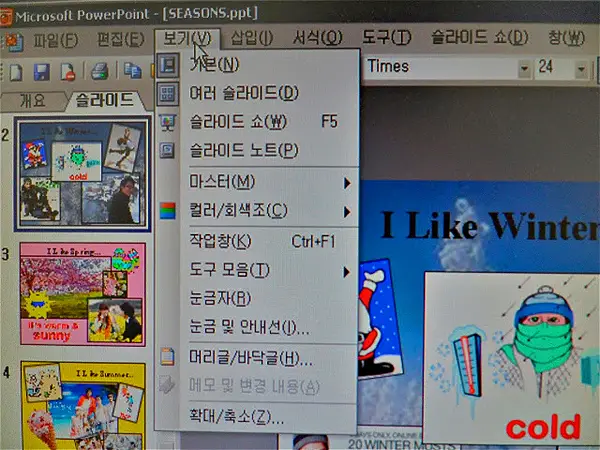
Whoever thought I’d be making Powerpoint presentations (download a sample here) and saving files on USB memory sticks for my teaching job? Those tools sound like an office job. But these are tools of the trade in my school. I am so glad I knew the basics of office Powerpoint!
Dress attire? Professional to office casual attire is recommended, starting at elementary school. Korea is a fashionable and stylish culture. A nice suit with jacket or blazer is a good starter as one must look respectable when teaching.
I haven’t worn so many slacks and office blazers since well,… working in an office temping! Teachers in the United States must dress tastefully, but in elementary, they also dress comfortably. I’d say Korean standards of dress are more office casual to office professional compared to U.S. teachers who dress a cross between a tasteful soccer mom and office casual.
Read: A Day in a Life of an Native English Teacher in Korea
5. There is a five year teacher-principal rotation cycle
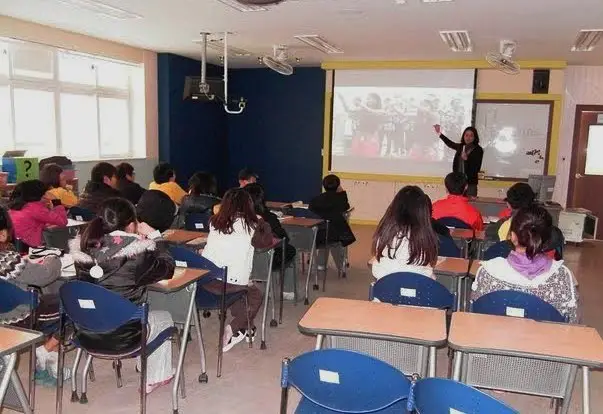
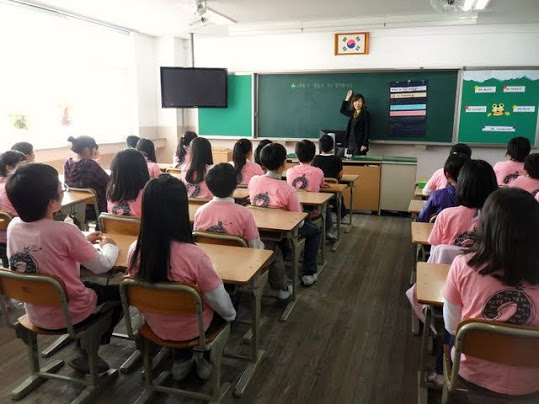
Teachers rotate schools every five years. It doesn’t matter if you love your school or not.
After each five year term, the teachers, vice principal and principal undergo a lottery system and have to change schools. Thus, each year, a school may get new staff.
This system is born to give each teacher an equal opportunity to work at good schools and bad. All teaching staff is subject to a valuation system and receive points for exams they take, workshops they attend as well as, receive incentive points for how well their school ranks in the district . Also, there are certain schools which are known to be model schools (these are the schools that Korean teachers want to teach at) where they have high performing students and other Korean teachers (and native English teachers like me), will make a trip to see how they run their classes and organize their programs to get their students to focus and learn. Learning is a serious business!
6. Role playing lessons can be very Hollywood style
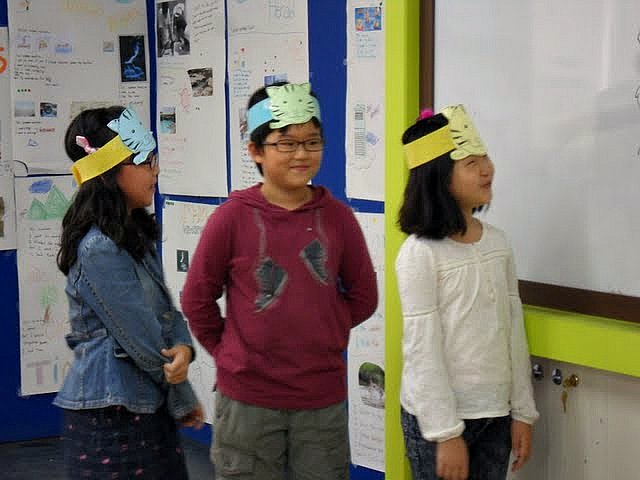
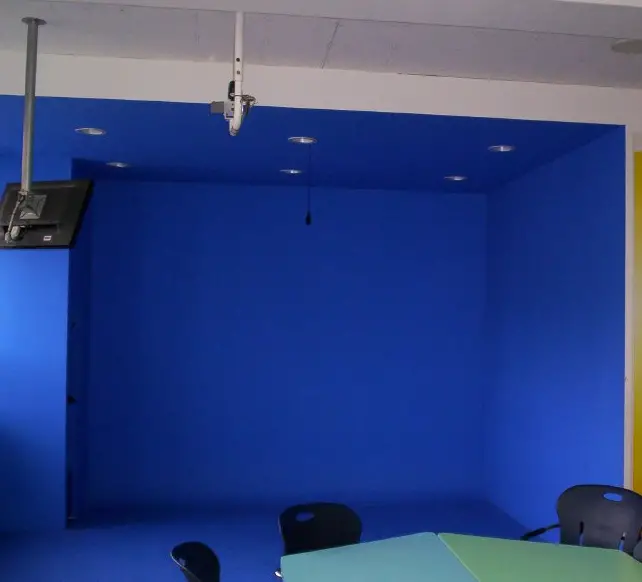
Some schools have blue screen technology and/or rooms with “role-playing sets” for kids to enact situations in. One class example we saw was a market checkout scene.. they had aisles, shelves and a real conveyor belt.
I eventually even worked at a Korean musical camp and we had role-playing rooms from traffic school (I had to wear a police hat and jacket and set up traffic cones) to a hospital room, with eye charts, stethoscope, height and weight scales, examination table, wheelchair and a doctor’s lab coat! Chincha?
7. Corporal punishment is still alive (although quite hushed)
While in the U.S., corporal punishment of children blares “immediate lawsuit”, the Korean educational system and parents have less of an issue with physical discipline in school classrooms.
Corporal punishment used to be allowed, and now, is somewhat tolerated, covertly. It is 2010 as I write this. The school system is cracking down on this abuse, but it still happens in some schools. One of my fellow foreign teacher friends said they have a disciplinary stick in their school, that Korean teachers have named the “magic wand”. Usually the disciplinarian is a male teacher. Click here for an article on the subject (although it is a bit dated)
Korea has however, employed physical discipline for disobedience in the past. The one below is a hands-off method I’ve seen used in some classrooms, as a way to make the students reflect on their wrong behavior, by challenging their mental endurance. But in the U.S. this method might still alarm some American parents, who are quick to see any type of physical suffering as abuse to a child (let alone, any punishment can be questionable by American standards).
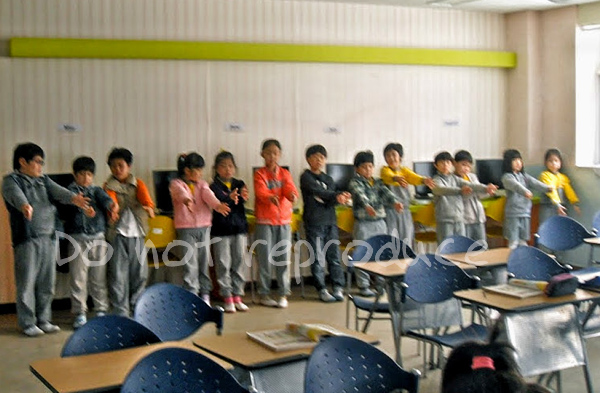 Common punishment (though not corporeal) for young ones is hands out or raised in air.
.
8. Why do some Korean students have “English” names?
Korean folks with English names are often very proud of them. Alice, Lola or Angelina… Some just make you want to hold back a giggle, because they’re either dated or feel like “role–play names”. But ever wonder where Koreans get their names?
Well, you can blame it on the foreign English teacher that gave it to them!
Some school English programs and hagwons suggest students be given English names for better immersion and occasionally it’s up to some twenty-something half-grown EFL teacher to do so! In my EPIK teacher orientation, one lecturer told us we might want to have a fishbowl of at least 25-100 English names for kids to choose from or to assign to students.
Then again, some teachers let their students pick their names! So if you have a student that comes up to you and introduces himself as Robocop (true story!) you can probably guess what happened.
[featured-box] Read • 1o (More) Facts about Korean Schools [/featured-box]
9. Students take responsibility for the cleanliness of their school.
One thing I admire about Korean values is that the Korean school system teaches students to be responsible for the care of their school. While employed janitors tend to major chores… trash on the school grounds, are actually done by students each morning before the school bell rings!
10. There is Shoe Etiquette in the Korean Classroom
You know that Asian tradition of taking your shoes off when you enter a house? Yeah, well I practice it in the U.S. with my family in Hawaii.
Korean culture and etiquette has a similar tradition as many Asian cultures, as they consider the feet to be dirty; so dirty that in fact, they wear house slippers at home. But the shoe etiquette goes beyond the house and into the classroom. Students and school staff must remove their outdoor shoes and change into “school slippers” upon entering the building.
Read 10 quirks which will shock you about Korean culture
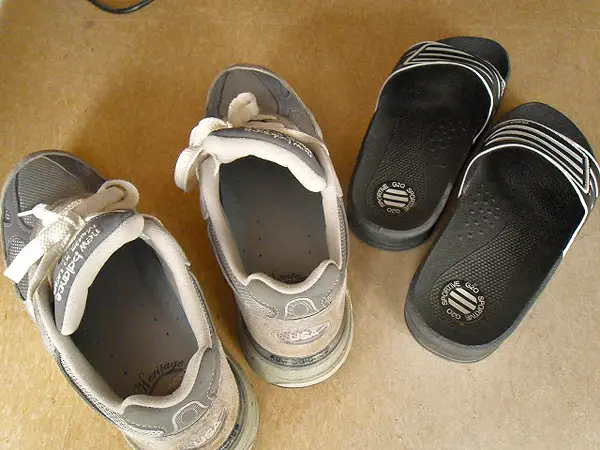 10 shocking facts about korean schools: My outdoor shoes & my school sandals .
(Below) School Shoes for Kids
Bonus video:
Watch my first day at my Korean Public Elementary School.